A short history of Korean embroidery, its cloths, threads and motifs, with a clear line between what is traditional and what Stitch Hoop invents for its puzzle rules.
Stitch Hoop is a puzzle about stitching a picture onto cloth, and its name comes from a real tool. The Korean word 수틀 (sutteul) means an embroidery frame, the round or square hoop that holds fabric taut while you sew. With the cloth stretched flat, stitches stay even and the fabric does not pucker.
While building the game, the JWorld team borrowed a lot of Korean cloth names and motifs. This article explains where they come from. We keep two things apart: history that is well known, and the rules our game made up. Where the record is unclear, we say so.
What embroidery and a hoop actually do
Embroidery means placing a design on cloth with needle and thread. In Korean you say you "place" (놓다) a stitch, and the frame that supports the cloth is the 수틀.
A hoop does two practical things:
- It keeps the cloth tight, so thread tension does not pull the fabric out of shape.
- It frees both hands: one above the cloth, one below, passing the needle back and forth.
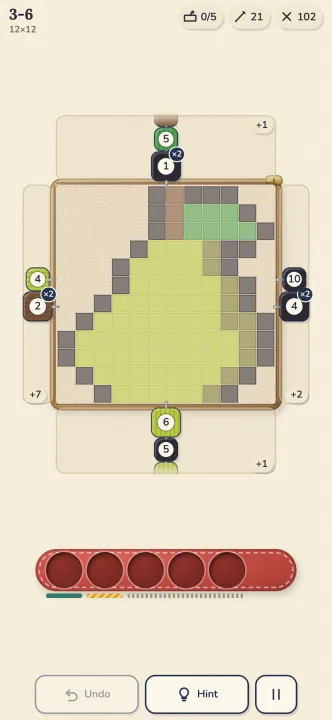
The game copies the picture of it. The cloth sits inside a frame, and needles come in from the four sides. One sweep along a side stitches the cells at that edge first, so a picture appears from the outside in. That order is a rule of our puzzle. Real embroiderers can begin anywhere, and are generally said to start with outlines or a central motif. The outside-in reveal is a game design choice, not a craft tradition.
Where Korean embroidery was used
Surviving objects and written records show embroidery in many parts of life. Roughly:
| Use | Typical objects | Motifs |
|---|---|---|
| Ceremony | wedding robes, court clothing | flowers, birds and other auspicious motifs wishing for luck and long life |
| Official dress | 흉배 (rank badges on chest and back) | in Joseon, civil officials are said to have worn cranes and military officials tigers |
| Interiors | folding screens, cushions, pillow ends | ten symbols of longevity, peonies, butterflies |
| Daily life | pouches, wrapping cloths (보자기), ornaments | small pieces made to fit the object |
It is said that learning needlework was a common part of a young woman's upbringing in the women's quarters of a household, and that the court had specialized embroiderers. Practice varied by period and region, so it is safer not to describe "one" Korean tradition.
The five cloths
Stitch Hoop's five worlds are named after traditional Korean cloths. These are the names players see:
| World | Korean | English | Picture size |
|---|---|---|---|
| 1 | 무명 | Cotton | 8×8 |
| 2 | 모시 | Ramie | 10×10 |
| 3 | 삼베 | Hemp | 12×12 |
| 4 | 비단 | Silk | 14×14 |
| 5 | 금사 | Gold thread | 16×16 |
What is generally known about each:
- Cotton (무명) is woven from cotton fibre. A well-known story says the official Mun Ik-jeom brought cotton seeds to Korea in the late Goryeo period; according to the record, cotton cloth then spread as everyday fabric.
- Ramie (모시) is a light, airy cloth made from the stem of the ramie plant, prized for summer clothing. Hansan in South Chungcheong is the place most associated with it.
- Hemp (삼베) is a coarser cloth from hemp stems. It breathes well and was used for summer and everyday garments.
- Silk (비단) is woven from silkworm thread. Silk cloth and silk floss are the classic partners for fine embroidery.
- Gold thread (금사) is metallic or gilded thread. Such thread is said to have been laid on the surface and tacked down with fine stitches.
Here is where the game takes over. As you climb the worlds, the cloth gets more precious and the grid gets bigger, from 8×8 in Cotton to 16×16 in Gold thread. That pairing is our design. There is no tradition that says ramie carries bigger pictures than cotton.
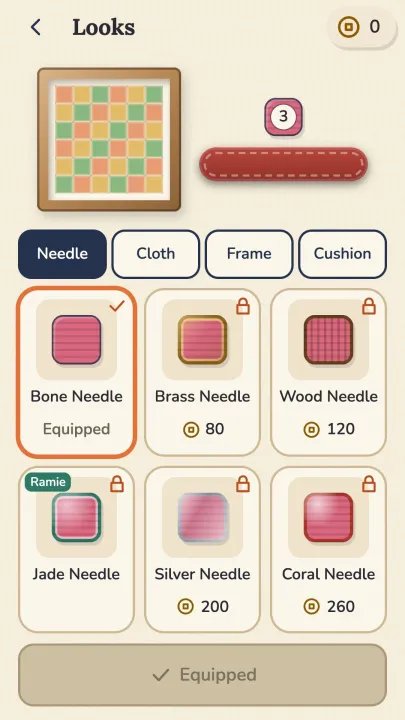
The Looks screen carries more names. It has four tabs (Needle, Cloth, Frame, Cushion), and the Jade Needle shows a Ramie badge, meaning it is a reward for clearing the Ramie world. Cloth options in the Korean version include 한지 (traditional paper), 쪽빛 천 (indigo) and 감물 천 (persimmon-dyed). Frames include a bamboo frame, a celadon frame and a mother-of-pearl lacquer frame. Indigo is a blue dye from the indigo plant, and persimmon dye is a brown dye made from unripe persimmon juice. The names are traditional; the shapes on screen are our own drawings.
Motifs borrowed from folk art
The hand-drawn pictures in Stitch Hoop use symbols common in Korean folk painting and crafts. Each note below follows the description we wrote in the game's data.
| Picture | Meaning |
|---|---|
| Persimmon | autumn fruit dried as 곶감; a gift for luck and long life |
| Butterfly | a pair stands for a happy marriage and long life |
| Turtle, crane, peach | all among the ten symbols of longevity (십장생); the crane is said to live a thousand years |
| Pine | green all year; loyalty and long life |
| Peony | the "king of flowers"; wishes for wealth and honor |
| Carp | the carp that leaps a waterfall and becomes a dragon; a wish for success |
| Bat | its word sounds like 복 (luck), so it is a luck motif |
| Magpie | its morning call is said to bring good news |
| Moon jar | the round white Joseon porcelain loved for its gentle imperfection |
Every one of these is a borrowed symbol. At roughly 8×8 to 12×12 cells, the shapes are boiled down to a few blocks of flat color. That is very far from the soft shading of real silk embroidery, so we would never claim to reproduce traditional embroidery. A fairer description is that the game moves the visual vocabulary of embroidery into pixels.
What the game invented
Some parts of Stitch Hoop have no tradition behind them. To avoid any confusion:
- Four needle trays: real hoops do not come with needles queued on four sides. This is a puzzle rule.
- A five-slot pincushion: pincushions are real sewing tools, but parking needles in five slots is our mechanic.
- Pixel-grid pictures: filling cells with flat colors is a simplification. Traditional Korean embroidery usually follows a drawn design with free-flowing lines.
- Worlds mapped to cloths: as explained above, our design.
- Outside-in reveal: a puzzle rule.
What is truly traditional is the vocabulary: the words 수틀, 무명, 모시, 삼베, 비단 and 금사, and the meanings attached to persimmons, cranes and peonies, which have been used in Korean culture for a long time.
Things to try in the game
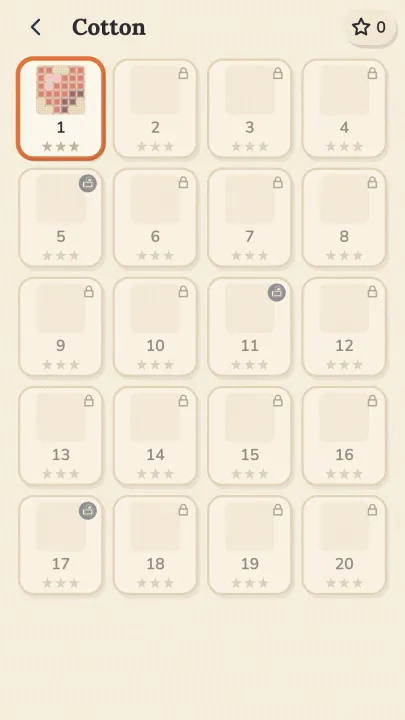
- Start in the Cotton world (8×8). The picture is small, so you can see clearly how a needle sweeps one side.
- When a picture is finished, it is shown as a framed embroidery. Take a moment to recognize the motif.
- Read the cloth and frame names in Looks. Hanji, indigo, persimmon dye and mother-of-pearl are all names from traditional crafts.
You can play Stitch Hoop on the web, and the game page is at Stitch Hoop.
Summary
- A 수틀 is the frame that holds cloth taut for embroidery. The game takes its name and look from it.
- Korean embroidery appeared on ceremonial robes, official badges, screens, wrapping cloths and more.
- Stitch Hoop's five worlds are Cotton, Ramie, Hemp, Silk and Gold thread, with pictures from 8×8 to 16×16.
- Pictures such as the persimmon, crane, peony and carp borrow traditional symbols but are simplified to pixels.
- The four trays, the five-slot pincushion and the outside-in reveal are our own puzzle rules.
Written by the JWorld team from our game design documents and measured play data, with AI tools helping with the writing.